Table of Contents
The $35/Month Savings I Found in My Attic
When I bought my home, the attic had R-19 insulation—half of what's recommended for cold climates. My January heating bills were $260. After upgrading to R-49 blown cellulose insulation, my January bills dropped to $185. That's $75/month, or $375 per heating season, from one improvement.
That experience made me an insulation evangelist. In my 12 years of home energy consulting, I've seen insulation upgrades consistently deliver the best ROI of any efficiency improvement. Here's exactly how insulation works and when to consider upgrading.
How Insulation Actually Works
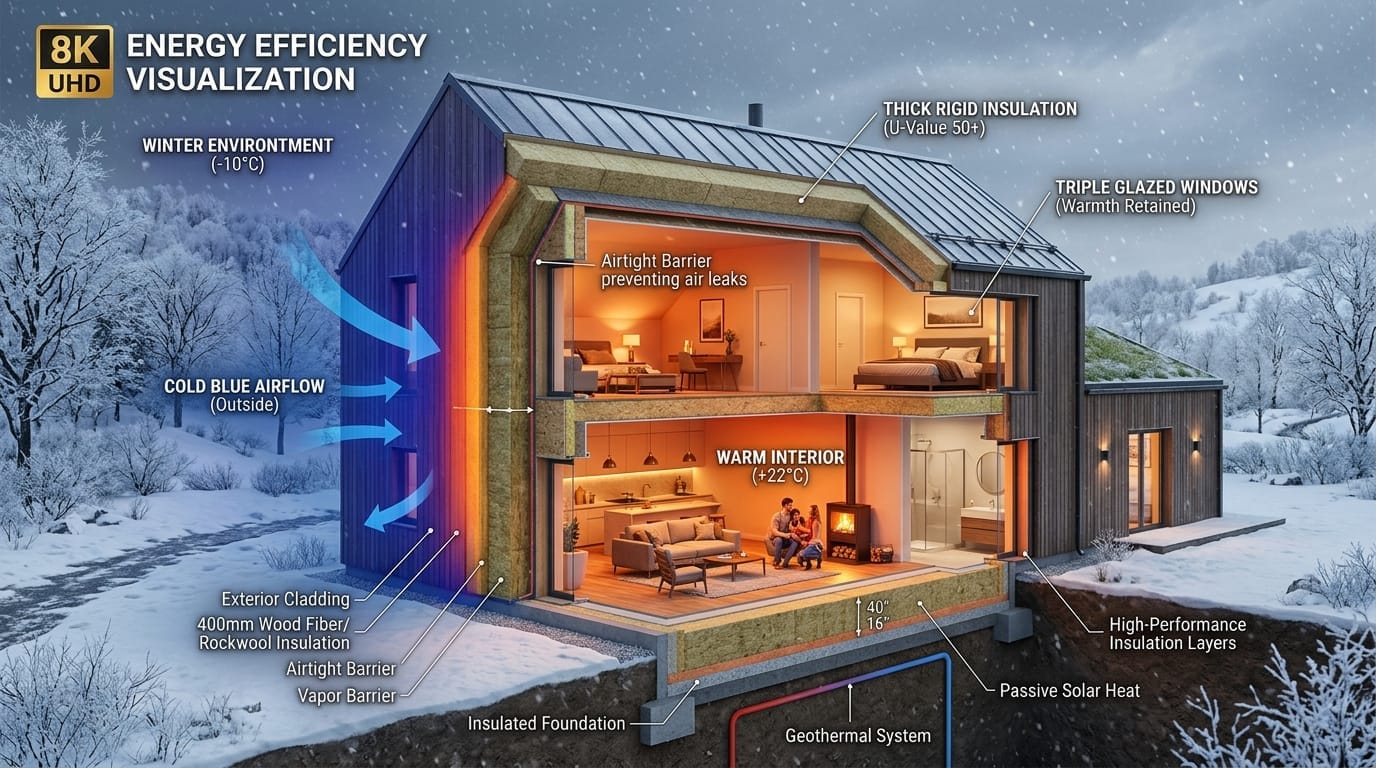
Insulation slows heat transfer—keeping heat inside during winter and outside during summer. The measurement is R-value: higher R means better insulation.
The U.S. Department of Energy recommends different R-values depending on your climate zone:
- Attic: R-49 (hot climates) to R-60 (very cold climates)
- Walls: R-13 (warmer) to R-21 (colder)
- Floors: R-25 to R-30
- Foundations: R-10 to R-20
Each R-value increase provides proportional heat flow reduction. Going from R-19 to R-49 cuts heat loss through that surface by about 60%.
R-Value Impact on Costs
| Insulation Level | Heating Cost Impact | Cooling Cost Impact |
|---|---|---|
| R-19 (typical older home) | Baseline | Baseline |
| R-30 | 20-25% reduction | 15-20% reduction |
| R-49 (recommended) | 35-45% reduction | 25-35% reduction |
| R-60 (optimal) | 45-55% reduction | 35-40% reduction |
*Savings compared to R-19 baseline, for climate zones 4-6
Case study: My neighbor's similar home (same size, same age, same furnace) had R-49 insulation while mine had R-19. His January heating bill was $180, mine was $260. The insulation difference alone was costing me $80/month.
Where Insulation Matters Most
Heat escapes through different surfaces in different amounts. Here's where to focus:
Attic (Biggest Impact)
Heat rises. In winter, up to 25% of home heat loss is through the ceiling. In summer, attic heat gain makes AC work overtime. This is the highest-impact insulation upgrade in most homes. Estimate potential savings from insulation upgrades.
Walls
Wall insulation varies dramatically by home age. Pre-1970s homes often have little or no wall insulation. Adding wall insulation (via injection foam or drilling) can cut energy use 10-15%.
Foundation/Basement
Unfinished basements can lose 10-15% of home heat. Insulating foundation walls (exterior or interior) provides significant savings, especially in cold climates.
Pro Tip: Before upgrading, check what you already have. In attics, you can see insulation depth. In walls, you need a professional energy audit with thermal imaging. Don't pay for upgrades you don't need—get the data first.
Insulation Cost and Payback
| Upgrade Type | Cost Range | Annual Savings | Payback |
|---|---|---|---|
| Attic (R-19 to R-49) | $1,500-3,000 | $200-400 | 5-10 years |
| Wall injection | $1,500-4,000 | $100-250 | 8-20 years |
| Basement wall | $1,000-3,000 | $80-150 | 8-20 years |
| Rim joist spray foam | $300-800 | $40-80 | 5-10 years |
*Costs and savings vary significantly by climate, home size, and existing insulation levels
Attic insulation typically offers the best payback—especially if you're starting with R-19 or less.
Types of Insulation and When to Use Each
- Blown-in cellulose: Best for attics. R-49 coverage is easy, cost-effective. $1,500-2,500 for typical home.
- Fiberglass batts: Standard for walls and some attics. Less expensive but can leave gaps if not installed perfectly.
- Spray foam: Best for gaps, rim joists, and hard-to-insulate areas. Creates air seal plus insulation.
- Rigid foam: Best for foundations and exterior walls. High R-value per inch.
Insulation Mistakes That Waste Money
What Most Homeowners Get Wrong #1: Adding more insulation on top of old, compressed insulation. In attics, you often just need to blow more on top. Don't remove old insulation unless it's wet or damaged—it's fine to layer new over old.
The Trap Most People Fall Into #2: Ignoring air sealing. Insulation slows heat transfer but doesn't stop air movement. Air leaks (around windows, electrical boxes, penetrations) cause drafts that insulation can't fix. Seal air leaks first, then add insulation.
Insulation and Energy Questions
My basement stays cold even with heat running. Could it be insulation?
Almost certainly the foundation walls weren't insulated properly. Basement foundations in most of the country need at least R-10 to R-15 insulation on the exterior or interior. If they just drywall'd over bare concrete, you have a massive heat sink sucking warmth out of your finished space. The fix is either adding rigid foam insulation to the interior or spray foam—which costs money but actually works.
Is spray foam worth the extra cost over regular insulation?
For some applications, yes. Spray foam creates an air barrier as well as an insulation barrier—ordinary insulation just slows heat transfer but doesn't stop air movement. In rim joists (that band between your foundation and first floor) and around penetrations, spray foam excels. But for a whole attic? The cost difference over blown-in cellulose is hard to justify unless you're in an extremely cold climate.
The contractor wants to charge $3,000 to insulate our attic. How do I know if that's reasonable?
Get at least three quotes. For a typical 1,500-2,000 square foot attic with moderate existing insulation (around R-19), adding enough blown-in cellulose to reach R-49 runs about $1,500-$2,500 depending on your region. If you're starting from R-0, prices go up because you need more material. Watch out for quotes that seem too low (they might be cutting corners) or too high (they're probably padding the estimate).