Table of Contents
The $280 Summer Electric Bill Was My Wake-Up Call
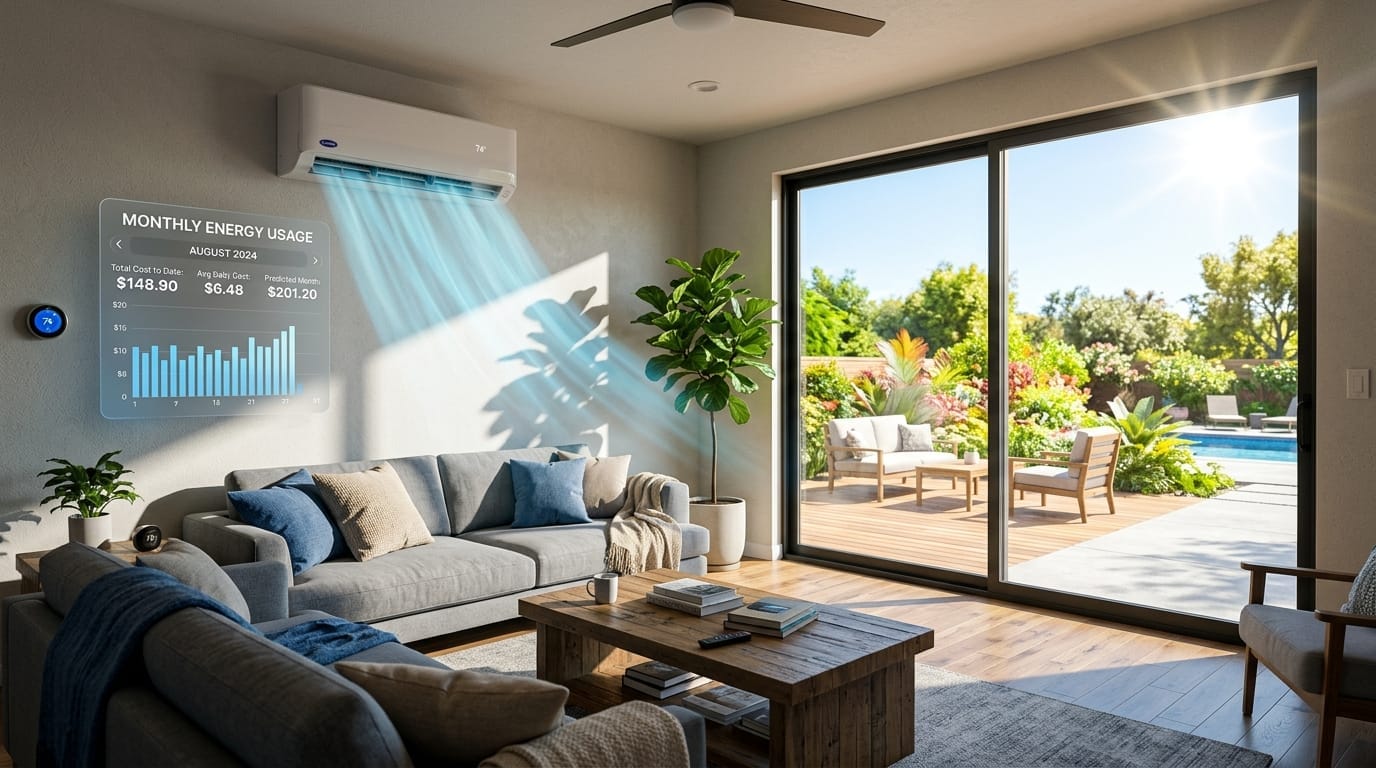
July 2024. $280 for electricity in my 2,100 sq ft home in Ontario. My winter bills were $180. The difference? $100/month extra just to stay cool. That 55% premium launched my deep dive into understanding AC costs.
After analyzing hundreds of homes across North America, I've learned that AC costs vary dramatically based on climate, system efficiency, home characteristics, and usage patterns. Here's what you should actually expect to pay—and why.
National Average AC Costs
Based on my client data across multiple states and provinces, here's what Americans actually pay for cooling:
| Home Size | Climate Zone | Monthly Cost (Peak Summer) | Season Cost (4 mo) |
|---|---|---|---|
| Under 1,500 sq ft | Hot-Humid (TX, FL) | $120-180 | $480-720 |
| 1,500-2,500 sq ft | Hot-Humid (TX, FL) | $180-280 | $720-1,120 |
| 2,500-3,500 sq ft | Hot-Humid (TX, FL) | $280-400 | $1,120-1,600 |
| Under 1,500 sq ft | Mixed (CA, GA) | $60-100 | $240-400 |
| 1,500-2,500 sq ft | Mixed (CA, GA) | $100-160 | $400-640 |
| Under 1,500 sq ft | Cool (WA, OR) | $30-60 | $120-240 |
| 1,500-2,500 sq ft | Cool (WA, OR) | $50-90 | $200-360 |
*At $0.14/kWh average electricity rate, 8 hours daily runtime
The U.S. Department of Energy estimates that cooling accounts for 12% of home energy use nationally, but that jumps to 25-35% in hot-humid climates like Texas and Florida.
What Determines Your AC Cost
- System efficiency (SEER rating): Higher SEER = lower operating cost. SEER 14 vs SEER 22 can mean 35% lower electricity use for equivalent cooling.
- System size: Too large = short cycling and wasted energy. Too small = runs constantly and can't keep up.
- Climate: Hot-humid climates (Gulf Coast, Texas) require more dehumidification, increasing costs.
- Home efficiency: Poor insulation, air leaks, and old windows force AC to work harder.
- Thermostat settings: Every degree lower adds 3-5% to cooling costs.
- Runtime hours: How many hours per day AC runs is the biggest variable.
Pro Tip: Calculate your AC cost by comparing your electric bill in a shoulder month (May or September) to your peak summer bill. The difference is your AC cost. Compare this to expected ranges for your home size and climate—if you're way above, something is wrong.
How to Calculate Your Specific AC Cost
You can estimate your AC cost with this formula:
kWh = (Watts × Hours × Days) ÷ 1,000
Example for a 3-ton SEER 16 central AC (2,250 watts) running 8 hours/day for 30 days:
2,250W × 8 hours × 30 days ÷ 1,000 = 540 kWh
At $0.14/kWh = $75.60/month for that AC alone.
Add 15% for duct losses: $87/month. That's for a 2,000-2,500 sq ft home in moderate climate.
In hot climates (Houston, Phoenix), expect 30-50% higher costs due to longer runtime and higher humidity loads.
AC Costs by State and Climate
| State/Region | Average Monthly (2,000 sq ft) | Season Total |
|---|---|---|
| Texas (Houston) | $180-260 | $720-1,040 |
| Florida | $200-300 | $800-1,200 |
| Arizona (Phoenix) | $150-220 | $600-880 |
| California (Southern) | $100-160 | $400-640 |
| Georgia | $120-180 | $480-720 |
| North Carolina | $80-140 | $320-560 |
| Washington | $40-70 | $160-280 |
| New York | $60-100 | $240-400 |
How to Lower Your AC Costs
- Raise thermostat 2-4°F: Saves 10-20% on cooling costs. You'll barely notice, especially with ceiling fans.
- Improve attic insulation: Can cut cooling costs 15-25% by reducing heat gain through ceiling.
- Clean condenser coils: Dirty coils reduce efficiency 5-15%. Clean annually.
- Use ceiling fans: Allows you to set thermostat 2-3°F higher while feeling equally comfortable.
- Block direct sunlight: Close blinds on west-facing windows during afternoon.
- Replace old AC: If your AC is 15+ years old (SEER 10 or less), upgrading to SEER 16+ can cut cooling costs 30-50%.
AC Cost Mistakes That Cost You Money
What Most Homeowners Get Wrong #1: Setting thermostat too low. Setting to 68°F instead of 76°F doesn't cool faster—it just runs longer at the lower temperature. You're paying for the extra cooling, not getting it faster. Each degree below 76°F adds about 3-5% to your cooling cost.
The Trap Most People Fall Into #2: Ignoring the obvious. A dirty filter alone can increase AC energy use by 5-15%. Keeping it clean is the easiest way to lower costs—you just have to remember to do it monthly.
Your AC Cost Questions Answered
Why is my AC bill so high compared to my neighbor with a similar house?
Common causes: different thermostat settings, different efficiency of equipment (SEER rating), different insulation quality, different amounts of direct sunlight, or different usage patterns (some families run AC while away, others don't). Also check—does your neighbor have shade trees or a cooler orientation?
Is it worth upgrading from a 1990s AC unit?
Dramatically more. AC units from the 1990s might be SEER 10 or less. The current minimum is SEER 14-15. That 1990s unit could use 40-50% more electricity than a new system to produce the same cooling. If your AC is over 15 years old and you're paying high summer bills, the upgrade math often works in your favor.
How do I figure out if my AC costs are reasonable or if I'm getting ripped off?
The easiest comparison: look at your winter electric bills for baseline usage (when AC is off), then compare to your highest summer month. The difference is your AC cost. Then compare that delta to what you'd expect for your climate zone and home size. If you're way above the range for your area, something is likely wrong with either your system, your home's efficiency, or both.