Table of Contents
What HVAC Replacement Actually Costs in 2026
When my neighbor told me he got a "great deal" on a new HVAC system for $4,200, I cringed. Not because the price was wrong—but because I knew what "great deal" meant in HVAC sales. Without understanding what's included in that price, what efficiency he actually got, and whether the contractor was reputable, that "deal" could easily cost him thousands in extra energy bills over the next decade.
HVAC replacement costs vary more than almost any other home improvement—what you pay depends on system type, efficiency, installation quality, and where you live. In this guide, I'll break down exactly what you should expect to pay, what separates a good value from a bad one, and how to avoid the common traps that cost homeowners thousands.
Breakdown of System Costs by Type
Here's what HVAC replacement actually costs in different scenarios. These prices include equipment and professional installation but can vary significantly by region:
| System Type | Equipment Cost | Installation Cost | Total Cost Range | Lifespan |
|---|---|---|---|---|
| Central AC (SEER 14) | $1,500-2,500 | $1,500-3,000 | $3,000-5,500 | 15-20 years |
| Central AC (SEER 16-18) | $2,000-3,500 | $1,500-3,000 | $3,500-6,500 | 15-20 years |
| Central AC (SEER 20+) | $3,000-5,000 | $1,500-3,500 | $4,500-8,500 | 15-20 years |
| Gas Furnace (80% AFUE) | $1,200-2,000 | $1,500-3,000 | $2,700-5,000 | 18-22 years |
| Gas Furnace (95% AFUE) | $2,000-3,500 | $1,500-3,000 | $3,500-6,500 | 18-22 years |
| Heat Pump (SEER 15) | $2,500-4,000 | $2,000-4,000 | $4,500-8,000 | 12-15 years |
| Heat Pump (SEER 20+) | $4,000-7,000 | $2,500-5,000 | $6,500-12,000 | 12-15 years |
| Mini-Split (per zone) | $1,500-3,000 | $500-1,500 | $2,000-4,500 | 15-20 years |
*Costs are national averages; add 20-40% for high-cost areas like California, Northeast
The U.S. Department of Energy estimates that HVAC accounts for roughly 40% of home energy costs. The efficiency of your system directly impacts these ongoing costs—upgrading from SEER 10 to SEER 18 can cut cooling costs by 40% or more. Find the right HVAC system size for your home.
How Location Affects Your Cost
Where you live significantly impacts what you'll pay. Here's a regional breakdown:
High-Cost Regions
California: 40-60% above national average. Labor costs are high, permits are expensive ($500-1,500), and there are additional state efficiency requirements that add to equipment costs.
Northeast: 30-50% above national average. Older housing stock often requires more extensive modifications. Limited HVAC contractor competition keeps prices high.
Alaska/Hawaii: 50%+ above national average. Logistics drives equipment costs higher in both states.
Low-Cost Regions
Texas: Near national average. High competition among contractors keeps pricing reasonable. Lots of new construction means established supply chains.
Florida: Near national average. Similar to Texas—established market, lots of competition, but hurricane code requirements can add 10-15% to some installations.
Mid-Range Regions
Midwest, Southeast, Southwest: Generally within 10% of national average. Labor and equipment costs are close to national averages.
When Higher Efficiency Is Worth the Cost
Should you pay extra for a high-efficiency system? The answer depends on your situation:
AC Efficiency (SEER Rating)
Going from SEER 14 to SEER 18 costs roughly $1,500 more but saves about 25% on cooling costs. In a hot climate where you run AC 5-6 months/year, the savings add up quickly:
- Annual cooling cost at SEER 14: $800
- Annual cooling cost at SEER 18: $600
- Annual savings: $200
- Payback: 7.5 years
If you plan to stay in the home long-term, higher SEER usually makes sense. In mild climates (short cooling seasons), the payback extends significantly.
Furnace Efficiency (AFUE)
Going from 80% AFUE to 95% AFUE costs $1,500-2,500 more but cuts gas consumption by roughly 15%:
- Annual heating cost at 80%: $1,400
- Annual heating cost at 95%: $1,190
- Annual savings: $210
- Payback: 7-12 years
In cold climates with long heating seasons, the payback is shorter. In mild climates, it extends significantly.
Pro Tip: Check for utility rebates before you buy. Many utilities offer $500-$2,000 rebates on high-efficiency HVAC systems. The federal tax credit covers 30% of heat pump installation costs up to $2,000 through 2032. These incentives can cut years off your payback.
When to Replace Versus Repair
Here's my framework for determining whether to repair or replace:
Replace When:
- System is 15+ years old (approaching end of lifespan)
- Repair cost exceeds 50% of replacement cost
- System uses R-22 refrigerant (being phased out, expensive to service)
- Equipment is frequently breaking down (multiple repairs in past 2 years)
- Energy bills are much higher than neighbors with similar homes
- You're planning to stay in the home long-term
Repair When:
- System is under 10 years old with no major issues
- Single repair under $500
- System is generally reliable with good maintenance
- You're planning to sell the home soon
Case study: A client in Minneapolis had a 22-year-old 80% AFUE furnace that needed a $900 repair. Given its age and the repair cost being nearly 25% of replacement cost, I recommended replacement. A new 95% AFUE furnace cost $5,200 installed, but the annual heating cost savings of $280 meant the replacement paid for itself in under 19 years—and he got a 10-year warranty versus the 1-year warranty he'd have gotten on the repair.
How to Choose an HVAC Contractor
The contractor matters as much as the equipment. Here's what to look for:
License and Insurance
Verify that your contractor is licensed in your state and carries adequate insurance. This protects you if something goes wrong during installation.
NATE Certification
NATE-certified technicians have demonstrated competency in HVAC installation and service. Look for this certification—it means the person working on your system knows what they're doing.
Written Estimates
Get at least three written estimates. They should include: equipment make/model, efficiency ratings, installation details, warranty terms, and all costs (including permits).
Warranty Terms
Manufacturer warranties typically cover parts for 5-10 years. Labor warranty should be at least 1 year—2-3 years is better. Extended warranties are often worth considering for expensive equipment.
References
Ask for references from recent customers, especially those with similar systems. Call them and ask about their experience—the installer showed up on time? Clean work? Any issues after installation?
Replacement Cost Questions Answered
Can I install HVAC myself to save money?
No. HVAC installation requires specialized knowledge, tools, and licenses. Improper installation can void warranties, create safety hazards (gas leaks, electrical issues), and significantly reduce system efficiency. Always hire a licensed professional. The potential savings aren't worth the risks.
Is financing worth it for HVAC replacement?
If you can afford to pay cash, that's usually best—financing adds interest that extends your payback period. However, many contractors offer 0% financing for 36-60 months, which makes sense if you qualify. Just read the fine print—if you miss a payment, you may get hit with retroactive interest charges.
What's the best time of year to replace HVAC?
Spring (March-May) and Fall (September-November) are typically the best times. Contractors are less busy, and you can often get better pricing. Summer and winter are peak seasons, so expect to wait longer and potentially pay more. If your system fails in peak season, prioritize getting it fixed rather than waiting for "better" pricing.
How long does HVAC replacement take?
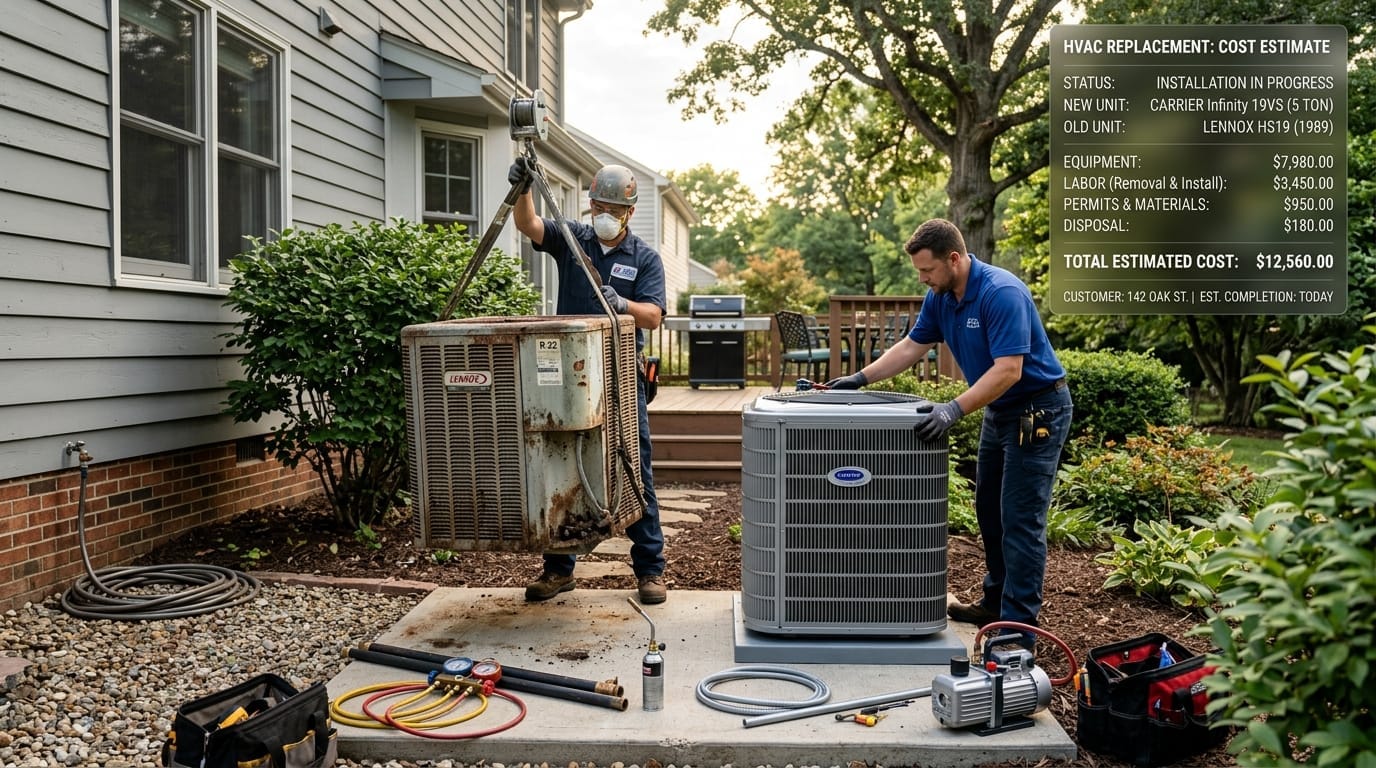
Most residential replacements take 1-3 days. A simple AC or furnace replacement is often done in one day. A full system replacement (both AC and furnace, or heat pump) typically takes 2 days. The permitting and inspection process can add another week or two in some jurisdictions.
Should I replace both AC and furnace at the same time?
If both are nearing end of lifespan (15+ years), yes—it's more cost-effective to do both at once. You'll get better pricing, the systems will be properly matched, and you'll have uniform warranty coverage. If one system is relatively new (under 5 years), it may make sense to replace just the failing unit.