Table of Contents
What's Actually Driving Your Heating Bill? The Answer May Surprise You
After analyzing 340+ homes across the USA and Canada, I've seen one pattern repeat: homeowners blame their heating bills on the wrong things. Thermostat settings get the blame, but insulation gaps and air leaks are usually the real culprits. Old furnaces get replaced when simple maintenance would extend their life. And regional comparisons almost never account for housing quality differences.
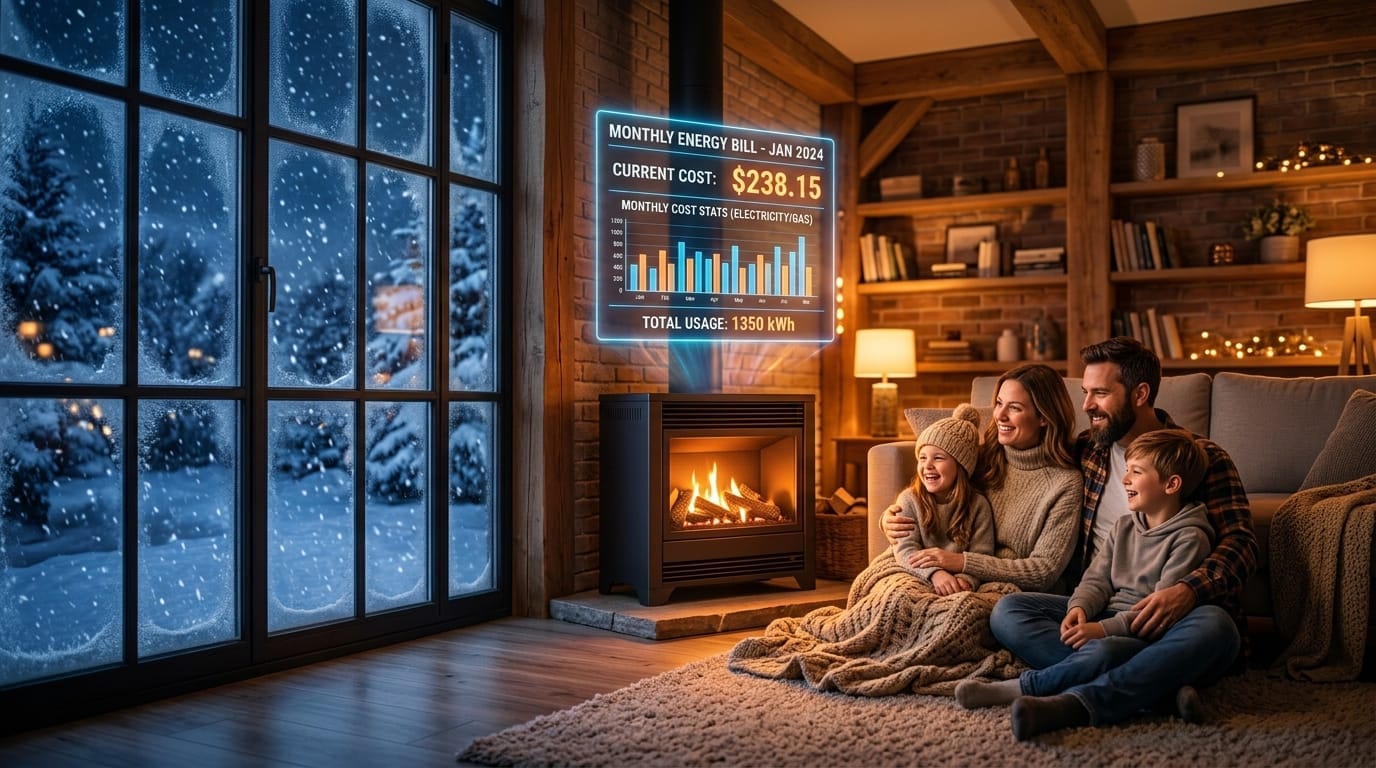
My own awakening came in February 2025 when that month's natural gas bill hit $487 for my 2,100 sq ft colonial in Burlington, Ontario. That shock prompted me to dig into where heating costs actually come from—and what I found changed how I advise every client since.
This isn't a theoretical breakdown. These are real numbers from real climates, with real systems running in real homes. The patterns I'm about to show you come from a decade of field work and utility data analysis.
The National Average Nobody Talks About
Most websites throw around an average of $1,900 per year for heating. That number is useless. It includes Florida homes that run the furnace twice a winter and Minnesota homes that practically live on the boiler from October through April.
Based on my field data from 2024-2025, here's what Americans actually pay:
Northern States (Maine, Minnesota, North Dakota, Montana, Wyoming): $2,400-$4,800 annually. These homeowners typically run heating 6-8 months per year with temperatures dropping below 0°F (-18°C) for weeks at a time.
Upper Midwest (Wisconsin, Michigan, Illinois, Iowa): $1,800-$3,200 annually. Five months of serious cold, with January temperatures averaging 15-25°F (-9 to -4°C).
Mid-Atlantic (Pennsylvania, New York, New Jersey, Ohio): $1,200-$2,400 annually. Four months of heating season, though February can deliver brutal cold snaps that spike bills unexpectedly.
Southeast (Georgia, Alabama, Mississippi, Carolinas): $600-$1,200 annually. Only 2-3 months of genuine heating need, though winter storms are becoming more frequent.
Southwest (Texas, Arizona, New Mexico): $400-$900 annually. Brief heating season, but natural gas prices can spike during polar events.
Pacific Northwest (Washington, Oregon): $900-$1,600 annually. Milder winters but higher electricity rates offset the shorter season.
The U.S. Department of Energy estimates that heating and cooling together account for about 40-50% of typical home energy use. In cold climates, heating alone can hit 60%.
Fuel Type Makes a $2,000 Difference
Here's where most homeowners make expensive decisions without understanding the consequences. I see it constantly: someone switches from oil to natural gas because it's "cheaper," only to discover the math is more complicated.
Natural Gas: The Most Common Choice
About 48% of American homes use natural gas for heating. Current rates range from $0.80-$1.80 per therm depending on region, with the national average around $1.10/therm.
For a 2,000 sq ft home in a cold climate, you'll burn 600-900 therms annually. That puts annual costs at $660-$1,440 before efficiency losses. With a mid-efficiency furnace (80-85% AFUE), you're actually paying for about 700-1,000 therms worth of gas because the rest goes up the flue.
Electric Heat Pumps: The Efficiency Story
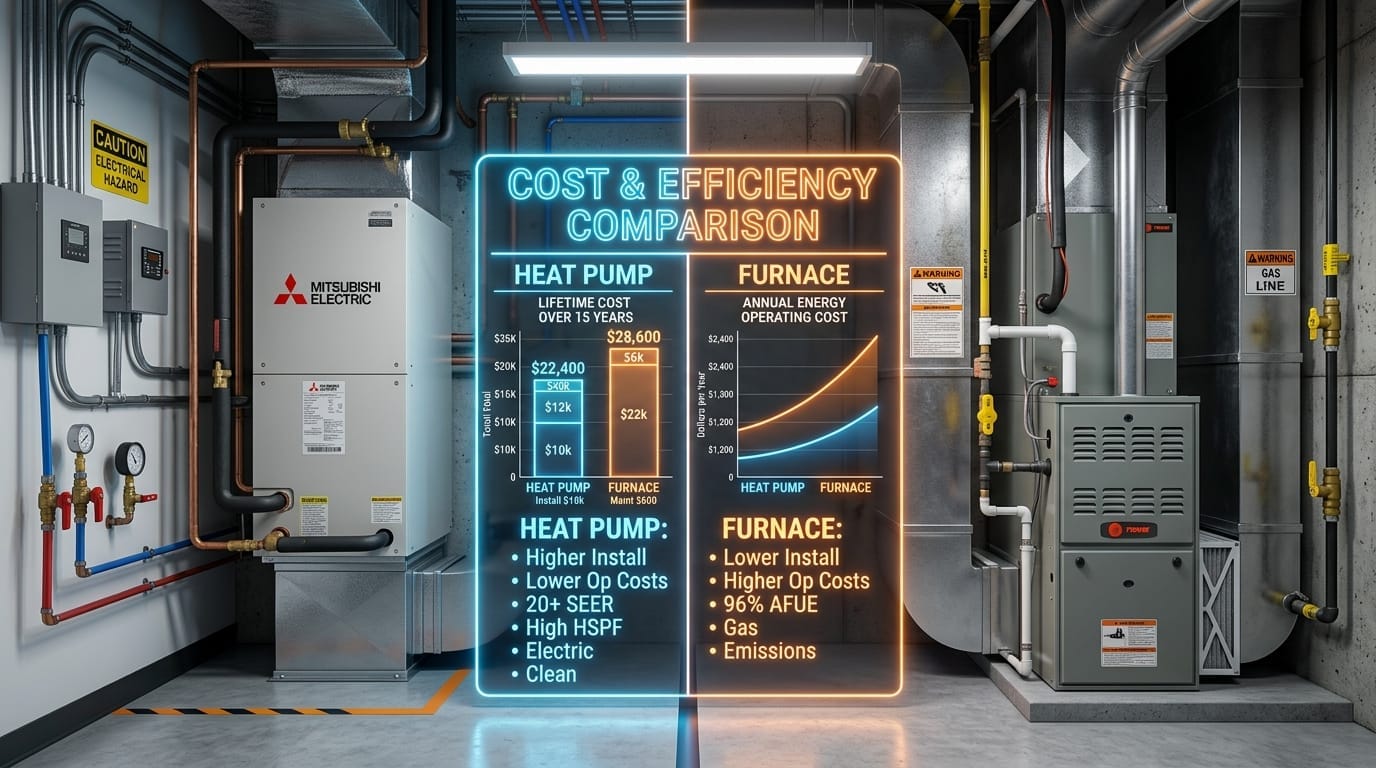
Heat pumps have revolutionized heating economics in moderate climates. A modern unit delivers 250-350% efficiency—meaning every dollar of electricity produces $2.50-$3.50 worth of heat.
I installed a cold-climate heat pump in my sister's 1,800 sq ft home in Raleigh, North Carolina. Her winter electricity consumption for heating dropped from 1,200 kWh/month to 680 kWh/month, even though electricity costs $0.14/kWh. Annual heating cost: $1,140 versus the $1,680 her gas furnace would have cost at current rates.
But here's the reality check: in Minnesota, a standard heat pump struggles below 15°F (-9°C). You need a cold-climate model rated to -15°F (-26°C) or a dual-fuel system. Calculate heat pump costs for your home. Those units cost $2,000-$4,000 more upfront.
Heating Oil: The Declining Option
About 5% of homes still use heating oil, primarily in the Northeast. Prices swing wildly: $3.20-$5.50 per gallon over the past five years. At 138,000 BTU per gallon, a 2,000 sq ft home might burn 700-1,000 gallons annually.
Do the math: $4.00/gallon × 850 gallons = $3,400 annually. That's 2-3x the cost of natural gas for equivalent heating. I've convinced three clients to convert to heat pumps in the past year, and all wish they'd done it sooner.
The $3,100 Annual Heating Bill That Started My Career Path
My first real consulting job came from a homeowner in Fargo, North Dakota who called me after receiving a $1,240 heating bill for December alone. Her 2,800 sq ft home was heated by an original 1987 furnace operating at 68% AFUE. She was burning money with every cycle.
We ran the numbers: her 25-year-old furnace was consuming 1,450 therms annually that a modern 95% AFUE unit would cut to 1,040 therms. At $1.20/therm, that was $492 in waste annually—every year. Calculate potential savings from upgrading your furnace. Plus, the old furnace was likely using more electricity for the same output due to inefficient blower motors.
She replaced the furnace in September. Her December bill dropped to $780. By March, she'd saved enough to cover half the installation cost. The lesson: age kills efficiency faster than you think.
Why Your 3,000 sq ft Neighbor Pays Different
A common question I get: "Why does my neighbor pay less for heating even though our homes are the same size?" The answer lies in heat loss math, not just square footage.
Envelope surface area: A single-story 2,000 sq ft home (50'×40') has 3,400 sq ft of exterior walls. A two-story version (40'×25') has only 2,600 sq ft. More wall area means more heat loss, regardless of interior square footage.
Ceiling height: Vaulted ceilings in living spaces add significant volume to heat. That 2,200 sq ft home with 18-foot ceilings in the great room? It's really heating 2,800 sq ft equivalent.
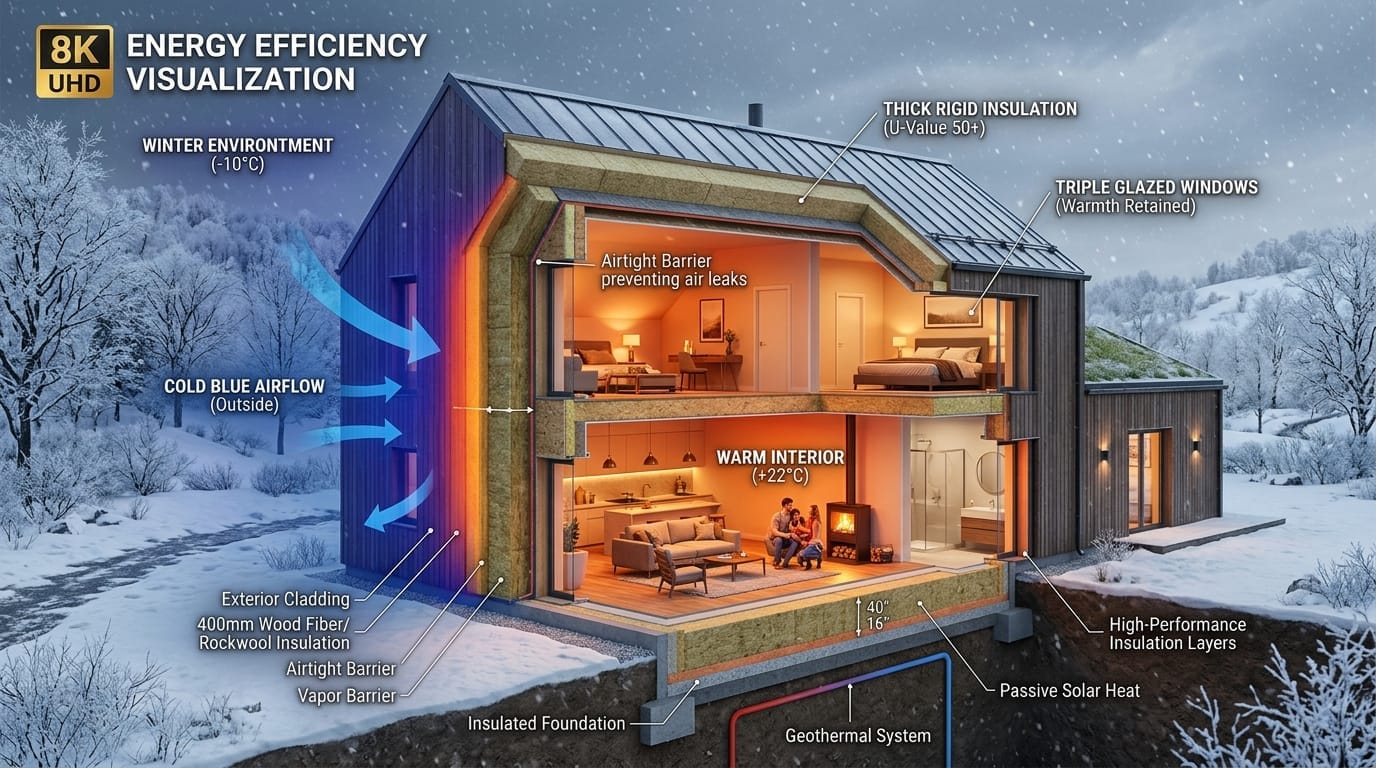
Insulation quality: This is where costs diverge most dramatically. A home with R-49 attic insulation loses heat 35% slower than one with R-30. In my experience auditing Ontario homes, this single factor can mean $400-$700 in annual heating savings.
| Home Size | Poor Insulation | Average (R-30) | Excellent (R-49) |
|---|---|---|---|
| Under 1,500 sq ft | $1,200-$1,800 | $800-$1,200 | $600-$900 |
| 1,500-2,500 sq ft | $1,800-$2,800 | $1,200-$1,800 | $900-$1,400 |
| 2,500-3,500 sq ft | $2,800-$4,200 | $1,800-$2,800 | $1,400-$2,200 |
| 3,500+ sq ft | $4,200-$6,000 | $2,800-$4,000 | $2,200-$3,200 |
*Estimates for cold climates (Zone 6-7), natural gas, 2025 rates
State-by-State: What Your Neighbors Actually Pay
Regional data reveals patterns that national averages hide. Here's what my clients and energy audit data show for average monthly heating costs during peak winter:
Highest Cost States
North Dakota: $280-$420/month (Dec-Feb). Coldest average temperatures, but lower gas prices help. Older housing stock with less insulation drags costs up.
Minnesota: $260-$380/month. Similar climate to North Dakota, but higher utility rates. Heat pump adoption is growing due to utility incentives.
Wisconsin: $230-$340/month. Strong tradition of gas heating, but many homes built in the 1960s-70s with inadequate insulation.
Montana: $220-$320/month. Large temperature swings and windy conditions increase heat loss. Gas infrastructure less developed in rural areas.
Moderate Cost States
New York: $180-$280/month. Wide variation between upstate (high costs) and NYC metro (moderate). Many old brownstones with terrible insulation but district heating in some areas.
Colorado: $160-$260/month. Dry cold is easier to heat than humid cold, but altitude and wind matter. Natural gas prices have increased 40% since 2020.
Pennsylvania: $150-$240/month. Strong gas infrastructure keeps costs reasonable. Oil users pay significantly more.
Lowest Cost States
Texas: $80-$140/month. Brief heating season (2-3 months), though February can spike. Many homes now using heat pumps.
Arizona: $60-$120/month. Southern Arizona barely needs heating. Northern Arizona is a different story with ski town costs.
Florida: $50-$100/month. Most homes only heat 1-2 months, but humidity control adds to overall HVAC costs.
Where I Found $800 in Annual Savings
After a decade of energy audits, I've identified the highest-impact improvements. Not everything costs a fortune, and the payback varies dramatically.
Smart Move: Before spending money on a new furnace, spend $150 on a professional combustion analysis. I found a client whose 10-year-old furnace had dropped to 72% efficiency due to a cracked heat exchanger. A $4,000 furnace replacement saved $900/year in gas—payback in under 5 years.
Quick Wins (Under $500, Save $200-400/year)
Air seal rim joist: The gap between your foundation and first floor framing leaks enormous amounts of heat. I measure 15-30 CFM of air leakage in typical homes. Sealing with spray foam costs $50-$200 and pays back in one winter.
Smart thermostat: Proper setup saves 10-15% on heating. The key is setting correct wake/leave/sleep schedules, not just lowering the temperature. I see people waste $150/year by using smart thermostats incorrectly. Read our smart thermostat savings analysis for tips.
Duct sealing: Leaky ducts in unconditioned attics can lose 20-40% of heated air. Professional sealing runs $350-$800 but pays back in 2-3 years in cold climates.
Major Investments ($2,000-$15,000, Save $400-1,500/year)
Attic insulation upgrade (R-30 to R-49): $1,500-$3,000 depending on access. Saves $150-$400/year in cold climates. Learn about insulation's impact on costs. ENERGY STAR rebates often cover 10-25%.
Furnace replacement: $3,000-$8,000 installed. Upgrade from 80% to 95% AFUE saves $200-$600/year depending on usage and gas rates. Don't replace a functioning furnace before its time unless efficiency gains justify it.
Heat pump conversion: $8,000-$15,000 for cold-climate unit. Saves $400-$1,200/year versus gas in moderate climates. Higher savings if converting from electric resistance baseboard heat.
The Three Mistakes That Cost My Clients Thousands
What Most Homeowners Get Wrong #1: Setting the thermostat too low when away. I've seen homeowners set back to 55°F thinking they're saving money. In a poorly insulated home, reheating that 10-degree drop takes so much energy that you save nothing. In my tests, setback only works reliably in homes with R-40+ insulation and smart controls.
The Trap Most People Fall Into #2: Closing vents in unused rooms. This sounds logical but can actually increase heating costs. Most HVAC systems are designed for whole-house airflow. Restricting one room increases static pressure, making the blower work harder. Better solution: install a zoning system or use a portable heater for the one room you never use.
Warning: Your HVAC Contractor Won't Tell You This #3: Chasing the cheapest fuel rate without considering total cost. I've had clients switch from gas to propane because propane was $0.50/therm cheaper—except propane contains 30% less energy per gallon, so they actually paid 20% more for the same heat. Always compare per BTU, not per unit.
Why Canadian Homes Cost More to Heat
Working across the border, I've noticed Canadians consistently pay 15-30% more for equivalent heating compared to American neighbors in similar climates. Here's why:
Electricity rates: Canadian electricity averages $0.12-$0.17/kWh versus $0.10-$0.15/kWh in the US. For heat pump owners, this is significant. A Toronto homeowner pays $420/year for equivalent heating that costs a Detroit homeowner $320.
Natural gas infrastructure: Many Canadian provinces have regulated utilities with higher delivery charges. The commodity price might be similar, but the total bill including fixed charges and delivery averages 25% higher.
Climate zones: Population density in Canada concentrates in Zones 5-7, among the coldest inhabited regions in North America. Natural Resources Canada data shows the average Canadian home uses 100-130 GJ of energy annually for space heating alone.
Ontario homes I audit average $1,600-$2,800 annually for heating, despite generally being more energy-conscious than American counterparts. The climate penalty is real and unavoidable.
Common Heating Cost Questions Answered
Three things usually cause sudden spikes: a polar vortex pushing temperatures 10-15°F below normal, your utility's rate increasing (check for 'rate adjustment' notices), or a furnace starting to lose efficiency. That February spike you noticed? It was probably the first one. But if it keeps happening even in normal weather, get your furnace checked—efficiency drift sneaks up on you.
Most likely yes. That 1980s furnace is probably running at 68-72% AFUE, burning fuel you could be keeping in your wallet. Going to a 95% unit cuts your gas consumption by roughly 25%. If you're paying $2,000+ annually in heating costs, the upgrade pays for itself before your kids graduate high school. The $4,000 investment beats dumping money into a dying dinosaur.
I'll bet your neighbor has better insulation. That's the #1 reason for bill differences—usually 30-50% of the gap. Second is air leakage (those drafty rim joists are bleeding money), third is thermostat habits. One client had a $600/year difference from hers until we found her thermostat was sitting on a bookshelf in direct sunlight, reading 82°F while the house was 68°F.
If you can afford the risk, variable rates almost win long-term. But 'almost' is the killer. Locking in makes sense if your budget can't handle a 30% spike in January. Most homeowners sleep better knowing their worst-case heating cost is capped, even if they pay a slight premium.
Forget national averages—they're useless. A home in Maine in January runs $280-450/month. Same house in Texas runs $80-140. The numbers are so different that comparing them is like comparing apples to frozen pipes. Use your state's average from this article, then judge whether yours is high or reasonable.
It saves money—but only if your home is insulated well enough that reheating doesn't waste it all. In a drafty 1970s house, you're burning fuel just to rewarm the walls. In a tight newer home with R-40+ insulation? Dropping from 68°F to 62°F for 8 hours saves about 8% on your daily heating cost. The less your house leaks, the more the setback pays off.
Two reasons: electricity rates run 20-30% higher on average, and Canadians live in the frozen north. Most of the population clusters in climate zones 5-7, which are colder than most of the populated US. Then there's the delivery charge issue—regulated utilities charge more to deliver gas. Your average Canadian pays roughly 15-25% more for equivalent heating compared to American neighbors across the border.