Table of Contents
The Month My Bill Hit $387 and I Had No Idea Why
Two years ago, I opened my January electric bill—$387 for a 2,100 sq ft home in Ontario. That's $100 more than the previous January, and I hadn't changed anything. Or so I thought.
That bill launched me into a deep dive on home energy consumption. I started tracking every major appliance, measuring runtime, analyzing my usage patterns. What I found: our water heater was running 4 hours per day when it should have been 2. Our old fridge in the basement was using as much electricity as our main fridge. And our wood stove's blower was drawing 200 watts continuously, 24/7.
After fixing those three issues, my bills dropped $120/month without changing anything else. In this guide, I'll show you exactly how to calculate your home energy consumption so you can find your own hidden waste—the stuff that silently inflates your bills.
How Your Home Uses Energy
Before calculating, understand where energy goes. The U.S. Department of Energy estimates the typical home breaks down like this:
| End Use | Average Percentage | Annual Cost ($1,500/mo home) |
|---|---|---|
| Heating (all fuels) | 40-50% | $720-900 |
| Cooling | 8-12% | $144-216 |
| Water Heating | 12-18% | $216-324 |
| Refrigeration | 5-8% | $90-144 |
| Lighting | 4-6% | $72-108 |
| Electronics/Appliances | 10-15% | $180-270 |
| Other | 5-10% | $90-180 |
*Heating percentages include all fuel types; percentages vary significantly by climate and home type
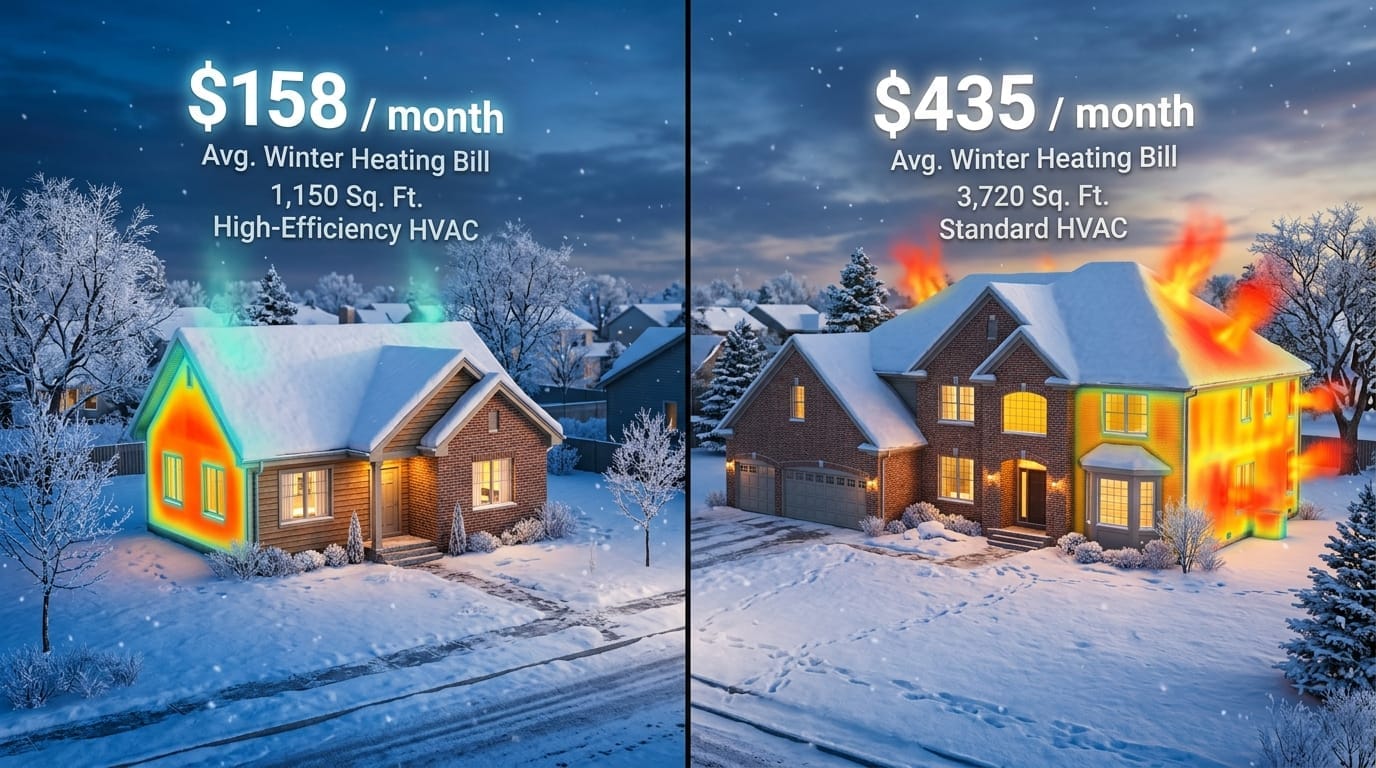
The key insight: heating and cooling dominate most budgets, but "typical" hides massive variation. In Florida, cooling can be 30% of your bill. In Minnesota, heating can be 60%. If you're in an all-electric home with electric heat, your breakdown looks completely different than a home with natural gas.
Three Ways to Calculate Your Energy Consumption
Method 1: Utility Bill Analysis (The Quick Way)
Look at 12 months of utility bills and categorize by season:
- Summer peak (June-August): Mostly AC
- Winter peak (December-February): Mostly heating
- Shoulder months (April-May, September-October): Base load + minimal HVAC
Subtract shoulder-month average from peak months to isolate HVAC costs. For example: $200 (July) - $80 (May) = $120/month for cooling.
For a more comprehensive picture, calculate your total annual energy costs with our calculator.
Method 2: Nameplate Math (The Equipment Way)
Find wattage on appliance nameplates, multiply by estimated daily hours, divide by 1,000 for kWh:
Example: Electric water heater at 4,500W, running 3 hours/day
4,500W × 3 hours ÷ 1,000 = 13.5 kWh/day × 30 days = 405 kWh/month
At $0.14/kWh, that's $56.70/month for water heating alone.
Use our electricity usage calculator to estimate consumption and costs for any appliance.
Method 3: Plug-in Metering (The Accurate Way)
Buy a Kill A Watt meter ($25-40) for devices you can unplug. For whole-home circuits, use a clamp meter or hire an electrician to install a circuit logger ($50-100).
Plug-in meters give you exact consumption for anything with a standard plug—fridges, TVs, computers, etc. This is how I found my basement fridge was using 180 kWh/month (almost as much as my main fridge) despite being opened twice monthly.
Expert Insight: For major HVAC equipment that you can't easily meter (furnace, central AC), estimate runtime using your thermostat's filter runtime monitor or by measuring the duty cycle (how often the system runs) during different outdoor temperature conditions.
Two Cases Where Calculation Revealed Hidden Costs
Case Study 1: The Phantom Load
A client in Austin, Texas had a $180/month electric bill in a 1,600 sq ft home—no gas, all-electric. We calculated that her AC and water heater should use about $100/month together. Where was the other $80?
We plugged in a meter and found it: three gaming PCs in a home office, each running 24/7. Combined: 450 watts × 24 hours × 30 days = 324 kWh/month. At $0.14/kWh, that's $45/month just for computers that were never turned off.
She added smart power strips and now saves $50/month—the computers only run when she's actually using them.
Case Study 2: The Always-On Water Heater
A client in Calgary, Alberta had a $340/month natural gas bill in winter—seemed high for a 1,800 sq ft home. Upon investigation, his water heater was a 50-gallon electric resistance unit running almost continuously.
We calculated: 4,500W × 20 hours/day (measured by logger) = 90 kWh/day. At $0.12/kWh, that's $324/month just for hot water—before space heating. The hot water was the problem, not the house.
He switched to a heat pump water heater (which uses 60-70% less electricity for equivalent heat output) and his total electric bill dropped to $180/month, even with the new heat pump running.
Estimated Consumption by Appliance
Here's a quick reference for typical energy consumption—your actual usage will vary based on efficiency, usage patterns, and climate:
| Appliance | Monthly kWh (Average) | Monthly Cost at $0.14/kWh | Ways to Reduce |
|---|---|---|---|
| Central AC (2,000 sq ft) | 400-800 | $56-112 | Increase thermostat, improve insulation |
| Electric Furnace | 600-1,200 | $84-168 | Smart thermostat, filter changes |
| Gas Furnace (fan only) | 50-100 | $7-14 | Regular maintenance, proper airflow |
| Electric Water Heater | 300-500 | $42-70 | Lower temperature, reduce use, heat pump model |
| Refrigerator (modern) | 50-100 | $7-14 | Keep coils clean, don't leave door open |
| Refrigerator (old) | 100-200 | $14-28 | Replace with ENERGY STAR model |
| Lighting (LED home) | 30-60 | $4-8 | Already optimized with LEDs |
| Lighting (incandescent) | 100-200 | $14-28 | Switch to LEDs |
| Desktop Computer | 30-60 | $4-8 | Smart power strip, sleep mode |
| Gaming Computer | 100-200 | $14-28 | Turn off when not in use |
Electric Vehicles Add Significant Load
If you have an EV, its charging adds dramatically to your consumption. A typical EV uses 25-35 kWh per 100 miles. At 1,000 miles/month, that's 250-350 kWh for driving.
At $0.14/kWh, that's $35-49/month for 1,000 miles of driving—the equivalent of a second refrigerator running constantly. Many EV owners see their electric bills jump $40-60/month.
However, this is still far cheaper than gas. At $3.50/gallon and 25 MPG, 1,000 miles costs $140 in gasoline—3-4x the electricity cost.
ENERGY STAR certified appliances use 10-50% less energy than standard models. When replacing any major appliance, the energy savings often justify the upfront premium within 3-7 years.
Mistakes in Energy Calculation That Mislead Homeowners
What Most Homeowners Get Wrong #1: Using "average" numbers without adjusting for your climate. The US average for cooling might be 400 kWh/month—but in Houston, it's 800+. Use your actual historical usage, not national averages.
The Trap Most People Fall Into #2: Ignoring phantom loads. Devices on standby still draw power—sometimes 5-10 watts each. A TV, sound system, gaming console, and computer in "standby" can add $10-15/month. Use smart power strips to eliminate these.
Warning: Your HVAC Contractor Won't Tell You This #3: Comparing summer to winter or month to month without considering temperature differences. A $200 June bill versus $150 May doesn't mean something is wrong—it means it was hotter in June. Compare year-over-year same month to see actual trends.
Your Three-Step Action Plan
Step 1: Pull 12 months of utility bills and categorize by season. Calculate your average summer, winter, and shoulder-month usage. This gives you the baseline.
Step 2: Identify your largest energy users. For most homes, it's heating, cooling, or water heating. Focus your attention on the top 2-3 categories.
Step 3: Pick one "quick win" from your analysis. If your largest category is AC, maybe it's improving insulation or raising the thermostat. If it's water heating, maybe it's lowering the temperature or improving efficiency. Start with the highest-impact change first.
Energy calculation isn't about getting perfect numbers—it's about understanding where your money goes so you can prioritize improvements. Even a rough analysis usually reveals one or two categories that are dramatically higher than they should be.
Energy Consumption Questions
How accurate are online energy calculators?
Online calculators give rough estimates at best—they use broad averages that may not reflect your specific home, climate, or usage patterns. A calculator might estimate your AC at 500 kWh/month when you actually use 800 because your insulation is worse than average. Use calculators for initial research, but use your actual utility bills for planning.
Why is my bill higher than my neighbor's for a similar home?
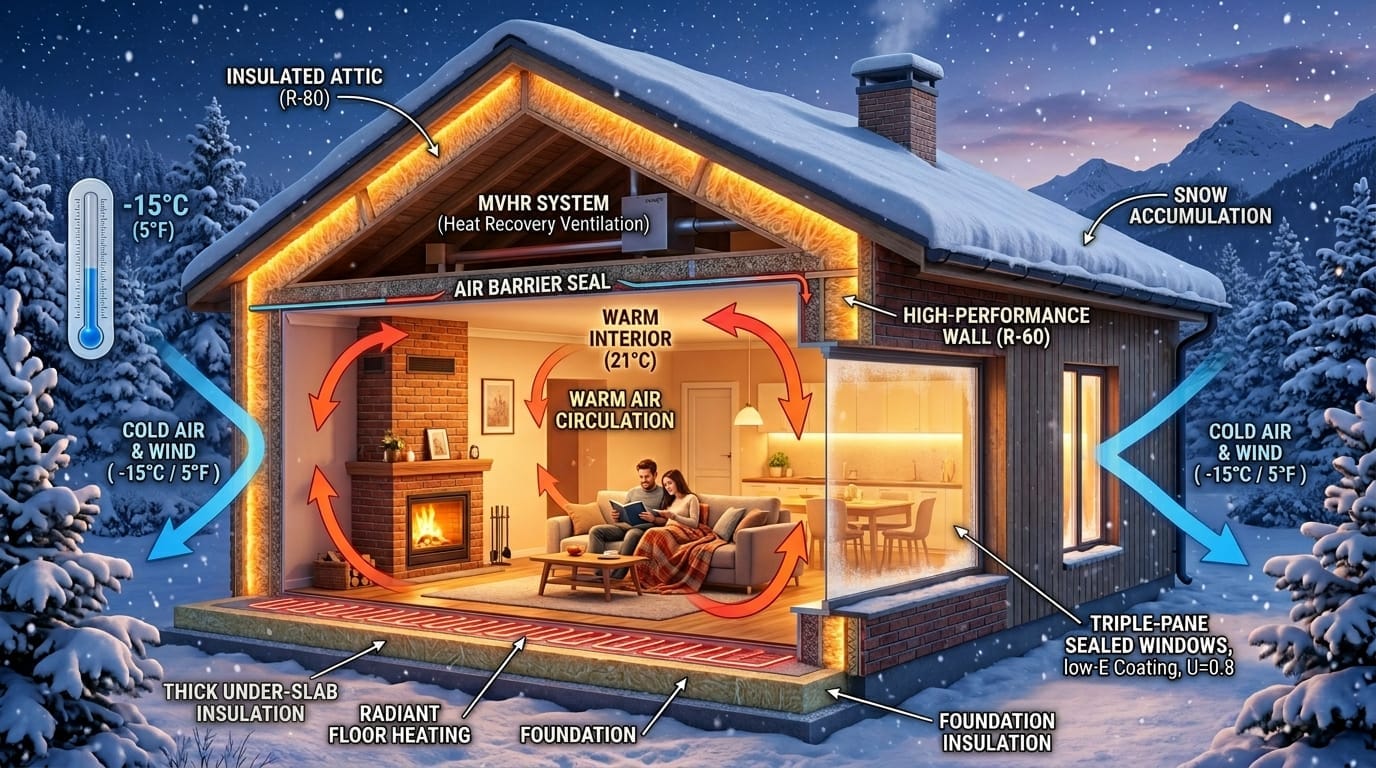
Several factors: different insulation quality, different thermostat behavior, different numbers of occupants, different efficiency of equipment, different amounts of Phantom load from electronics, and different air leakage. Ask to compare specific category usage if your utility provides it—or do your own detailed analysis using the methods above.
What uses the most electricity in an all-electric home?
In an all-electric home, heating typically dominates—often 50-60% of your bill in cold climates. If you have electric resistance heat (baseboard, portable heaters, or older furnaces), it's especially expensive. Consider a heat pump, which uses 50-70% less electricity for equivalent heating. Next highest is usually water heating, then cooling in summer.
My bill is high but I don't want to give up my comfortable lifestyle. Now what?
Good news: most savings come from fixing waste, not from suffering. That drafty window letting in hot air? Seal it. The AC running while you're at work? Set a schedule. The second fridge in the garage you open twice a month? Unplug it. These aren't lifestyle sacrifices—they're just removing the money burning a hole in your pocket.